Showing posts with label hardware. Show all posts

Friday, July 9, 2010

ASUS ARES - The world's fastest graphics card

This is the ARES, a $1000- $1200 limited edition GPU with twin Radeon HD 5870 GPUs, four gigabytes of GDDR5 memory.this GPU weighs nearly five pounds and requires a 750 watt power supply with three power connectors.


Reviews about this product.
Legit Review 
Overclock3D
Guru3D
 
PC Perspective
TechPowerUp

Thursday, July 8, 2010

Sony Vaio Laptop Recall

Sony announced a product recall for Sony Vaio laptops affecting more than half a million notebooks worldwide. Affected laptops causes overheating, but Sony has issued a firmware update that the company says will fix the issue.
The recall is for Sony Vaio laptops with model numbers beginning in VPCF11 and VPCWW2. The devices were typically purchased between January, 2010 and April, 2010 and sold for prices ranging from 800 to 1500 dollars.
You can find a complete list of specific model numbers within each notebook series on Sony's Website .


 You can solve the Problem yourself...!!
The overheating issue can be fixed with a BIOS firmware update.You can download the update here.

This is the third time Sony Vaio laptops have been hit with major product recalls.

Wednesday, July 7, 2010

Finally 3TB hard-drive from Seagate

The disk sizes are decreasing and the storage space increasing. From a long time we've been stuck at 2TB. Not anymore: Seagate announced that it is shipping the industry's first 3TB hard drive, the FreeAgent GoFlex Desk external drive.The drive, with a USB 2.0 connector, will sell for $250, which works out to $0.08 per gigabyte.

Why 2 TB Limit?

According to Seagate engineers, the 2 Tera Byte limitation was neither an issue with the file structure ( NTFS) nor a problem with the Windows operating system itself. Rather, the issue lay with the master boot record (MBR) partition table, contained in the first sector of a hard disk drive. The partition table used with Windows XP and earlier Microsoft operating systems was limited to just 2.2TB--which, a decade-plus ago, seemed an unthinkably high number. The table works by using numbers to represent the starting sector and the number of sectors of a partition, and it maxes out at 2.2TB (using 512-byte sector sizes).
Windows Vista and Windows 7 introduced a new partition-table scheme, dubbed GPT (for GUID Partition Table). The GPT blasted past the previous limitations by supporting up to 8 zettabytes.
note: 1024 terabytes = 1 petabyte,1024 petabytes = 1 exabyte, and 1024 exabytes = 1 zettabyte.
Windows Vista and Windows 7 maintain backward compatibility by also reading and writing MBR partitions.

Monday, June 14, 2010

INTEL's Tangent Bay Laptop

ntel Shows Laptop With 4 Screens,1 LCD and 3 OLED's

One of the more interesting ideas from Intel is the multi-screen laptop. While making a laptop with more than one display isn't a new concept (Lenovo's W700 or the gScreen), integrating four into one is a new mark. Of course, they're not all four full sized, but with one LCD and three auxiliary OLED, it's certainly neat.
What makes the Intel prototype even more interesting is that it features multitouch on all of its screens, allowing users to manipulate and move content from one screen to the next, as can be seen in the videos on CNet.

 That's four screens in total. Crazy, right? The prototype's three mini-screens let you organize and play files without taking up room on the main display. You can also use multi-touch gestures, and drag files between screens. 

Watch it in action:

Wednesday, May 5, 2010

AMD Phenom II X6 1090T

The 3.2GHz Phenom II X6 1090T lags behind Intel's six-core behemoth. Previously codenamed Thuban, the 1090T is a 45nm part, while Intel's 980X has been shrunk down to the 32nm process. Where the 980X offers a 12MB L3 cache for improved memory management between multithreaded applications, the 1090T offers only 6MB. And AMD's technology doesn't address Intel's much touted Hyper Threading technology, which turns their six-core processor into twelve available cores for applications to dabble with.


By most measures, Intel's six-core processor is the superior part. But in typical AMD fashion, what the Phenom II X6 1090T lacks in raw power, it makes up for with a tantalizingly competitive price: the 1090T can be had for as little as $300. By comparison, Intel's admittedly superior silicon comes with a $1000 price tag, making it virtually inaccessible for many enthusiasts. And that's assuming you already have a compatible motherboard. The 1090T offers drop-in support with existing AM3 and AM2+ socket motherboards, after a BIOS upgrade. The 980X, by contrast, requires the LGA 1366 socket.

Thursday, February 11, 2010

Switchable Graphics Technology from Nvidia

Notebooks with switchable graphics have been shipping for years, but they haven't lived up to user expectations. Nvidia hopes to change that with their new Optimus technology.
Optimus promises to make things much easier. When the system detects a 3D application or video (if it's decoded using the DirectX Video Acceleration plugin, as most are), the GPU simply turns on. When you're done with the 3D app or video, it goes back to the integrated GPU. There's no screen blanking, no buttons to hit or switches to flip. The technology promises discrete GPU power when you need it, integrated graphics when you don't, automatically.


Saturday, January 30, 2010

Modbook----A Mac tablet

The one and only Mac tablet

Praised by reviewers as "versatile" and "sturdy and sleek," the Modbook is the pioneering slate-style Mac® tablet that lets you draw and write directly on the screen. It combines Axiotron's hardware and software technology, a Wacom Penabled digitizer and an Apple MacBook to create a powerful tablet computer like no other.

Who's it for?

Built for creative professionals, students and general users, the Modbook has a condensed form factor and integrated pen-based user experience that offer unprecedented flexibility and control over the creative process.

Working in Mac OS® X, Modbook users can draw on the screen using popular applications like Autodesk® SketchBook® Express standard on every Modbook) and Adobe® Photoshop® — or use any other Mac-based application.

What makes it different?

The Modbook is the only Mac tablet available. And it is a fully functioning computer, not a plug-in tablet device with lots of cables and cords. You can sit down anywhere and work with it.

It has an etched ForceGlass™ screen to simulate paper, giving you a natural experience when using the included digitizer pen. Its magnesium frame and top shell give it superior structural strength, yet it is only slightly heavier than its original MacBook base system — the perfect mobile creative tool!

Monday, January 25, 2010

multi-laser computer

The ultra-small revolution has begun, thanks to scientists who claim to have developed a laser that can communicate in several wavelengths at once on a computer chip, boosting speed.
The on-chip light source will be a key to enabling the simultaneous transmission of multiple data channels either on-chip or between chips in a single optical fibre, each at a different wavelength.
The device, based on high index doped silica glass, is low loss and has a high degree of manufacturability and design flexibility.
And, this makes it an ideal integrated multiple wave length source not just to improve computing power, but for a wide range of applications including telecommunications, high- precision broadband sensing and spectroscopy, metrology, and even attosecond physics, say the scientists.
The findings have been published in the latest edition of the ‘Nature Photonics’ journal.

Wednesday, January 20, 2010

Maingear Shift --- Personal Super Computer


Maingear Shift included 3.33GHz Intel Core i7 975 Extreme Edition processor is the fastest processor you can buy, and an unobtrusive liquid cooling system helps Maingear overclock it all the way to 4.0GHz. Coupled with six gigabytes of DDR3-2000 memory and two Intel X25-M 80GB solid-state drives in a boot-drive RAID configuration and 2TB Western Digital Caviar Black drive for storage,. As you might expect, the tri-CrossFire graphics setup delivers a punishing blow as well. What you’re really paying for is this system’s graphics—three single-GPU XFX Radeon HD 5870 graphics cards delivering eye-popping CrossFire performance that’s currently unmatched by any system
The benefit of this unique layout is that, according to Maingear, it works with the tendency of hot air to rise, improving thermal dissipation from the graphics card and CPU. With no reasonable way to measure the flow of hot air from the Shift vs. one of its competitors, we have only Maingear's word that rotating the motherboard imparts a significant cooling benefit. Whether it has a large or small impact on thermal management, Maingear's unique design doesn't seem to do any harm, and by putting the inputs on the top of the system Maingear has made it easier to connect your various peripherals if you keep your PC on the floor.


Price $4,725
Motherboard chipset Intel X58
CPU 3.86GHz Intel Core i7 960 (overclocked)
Memory 6GB 1,600MHz DDR3 SDRAM
Graphics (2) 1GB ATI Radeon HD 5870
Hard drives 80GB Intel X25-M solid state hard drive; 1.5TB 5,400rpm Western Digital
Optical drive Blu-ray burner
Operating system Windows 7 Ultimate 64-bit)
Visit  Maingear Shift website

Tuesday, January 12, 2010

USB 3.0 Finally Arrives

The beauty of USB 3.0 is its backward compatibility with USB 2.0; you need a new cable and new host adapter (or, one motherboard that supports USB 3.0) to achieve USB 3.0, but you can still use the device on a USB 2.0 port and achieve typical USB 2.0 performance. In reducing some overhead requirements of USB (now, the interface only transmits data to the link and device that need it, so devices can go into low power state when not needed), the new incarnation now uses one-third the power of USB 2.0.


Improvement offered by USB 3.0 is dramatic --  10X speed over existing USB 2.0 hardware. Data transfer rate of USB 2.0 was aroundl 480Mbps theoretically , while USB 3.0 can theoretically handle up to 5Gbps.(the capacity of the drive is not considered here..).

Monday, December 21, 2009

Intel processor with integrated graphics

Intel has announced new Intel Atom processors that feature integrated graphics built directly into the CPU, enabling improved performance and smaller, more energy-efficient designs in a new generation of netbooks and Atom-based entry level desktop PCs. Major Original Equipment Manufacturers (OEMs) have committed to having systems on the new Intel Atom processors

Sunday, December 20, 2009

buying GRAPHICS cards

First try updating Your Drivers

If you're thinking of replacing your card because you're having problems running a certain game, make sure you have the latest version of the drivers for your current graphics card. You will find the latest drivers for your card available for download from the manufacturer's Web site.

Hardware Transform and Lighting

This has been a standard feature in game-oriented video cards for quite a few years, but there are still PCs around that don't have it. These are usually systems with Intel graphics integrated into the motherboard, commonly used in budget laptops and desktops designed for office use. If your desktop doesn't have hardware T&L and you have a graphics card slot available, adding a newer graphics card could be an option.


Power Consumption

Many cards designed for gaming require a considerable amount of power, and they often have additional power connectors on them because they can't get enough juice through the slot itself. They also require a relatively good power supply, especially for SLI and Crossfire systems with dual video cards. If you're upgrading to the latest high-end card, you may find yourself upgrading your power supply as well. Power requirements are usually stated in the graphics card's specifications.

Enhanced video playback:
Newer graphics boards have technologies--such as ATI's Avivo and nVidia's PureVideo--that enhance DVD playback, particularly at high-definition resolutions. Similar to what high-end DVD players do, Avivo- or PureVideo-equipped graphics boards can deinterlace images (remove artifacts) and scale them to fit your monitor.

Important:

Bus

Most PCs now have the faster PCI Express rather than the older AGP slots, but choose whichever interface your PC supports.

Chip Set

After the interface, deciding on a chip set is your next major decision.

Installed RAM

With more video memory, your graphics board can hold more image data, leading to faster rendering of textures and 3D graphics

Graphics Processor Clock Speed

While the clock speed of the graphics processor is a good overall indicator of how fast it will render 3D graphics, the high cost associated with top-of-the-line processors is no longer an absolute indicator of performance. The same holds true on the low end.

Monitor Ports

All new graphics cards have two display connectors for hooking up two monitors; and most have at least one DVI port. Still, for the maximum image quality on two LCD screens, you want to make sure you have two native DVI ports, though in a pinch a DVI port can connect to a VGA display if you have a DVI-to-VGA adapter (often included with the board itself).

 Slots Occupied

Before you buy a huge graphics card, make sure you have the room inside your PC to fit it. Some cards take up the space of two PCI Express slots.

RAM Type and Speed

Graphics boards come with different flavors of memory--DDR2 and DDR3 being the two most common ones right now. The newest cards have an even faster DDR4 memory. While in theory DDR4 memory is faster than DDR3 memory, other factors on a board also affect performance. The same logic goes for RAM speed.


compare different VGA cards

Monday, December 14, 2009

Multi-touch MOUSE


This new mouse comes bundled with the new IMAC and it is said to be the world's first mouse to have multi touch feature

Tuesday, December 8, 2009

Segate introduces it's first flash drive

Seagate Technology announced its first solid-state disk drive and said the product is aimed at the booming general server and blade server marketplace.
visit official website of this product


  Seagate's new Pulsar SSD is a 2.5-in., enterprise-class drive that uses single-level cell (SLC) NAND flash chips. The Pulsar will offer up to 240MB/sec. sequential read speeds and 200MB/sec. sequential write speeds or peak performance of up to 30,000 read IOPS and 25,000 write IOPS, with a five-year limited warranty. Seagate is among the last of the big disk drive manufacturers -- a list that includes Fujitsu, Hitachi and Western Digital -- to enter the SSD market.

Key Advantages

  • Single-level cell (SLC) technology optimizes SSD reliability and endurance
  • 0.44 percent AFR for high reliability and endurance
  • Up to 200GB capacity in a 2.5-inch form factor and 7mm z-height
  • Power loss data protection to ensure against data loss upon power failure
  • 5-Year Limited Warranty
  • SATA 3Gb/s interface to support current blade server chipsets
  • Leveraging industry-leading, global enterprise support
  • Industry-leading SSS and SSD standards development through JEDEC and SNIA

Thursday, November 12, 2009

Things to know Before buying a New Computer

I have removed this data as the specifications has changed and you should know much more than this
i'll post my updated data as soon as possible

the data given below is not complete..i'm still collecting latest data

Wednesday, November 11, 2009

2.3GHz, 3.5GHz WiMax with Kilmer Peak


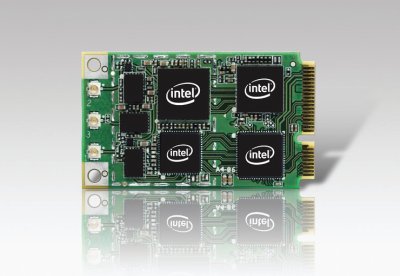
After keeping operators and users alike waiting for nearly a year, Intel has begun production of a wireless chipset, called Kilmer Peak, that will support three versions of WiMax, 2.3GHz, 2.5GHz and 3.5GHz.
Intel's current WiMax chipsets only support the 2.5GHz version of WiMax, which is used markets like Japan, the U.S. and Taiwan. The company doesn't yet support the 2.3GHz profile, which is used by operators in South Korea and Malaysia, or the 3.5GHz version used in Pakistan. That will change with Kilmer Peak.

Sunday, September 13, 2009

About HARD DISC

 
fig : OLD IDE DRIVE

Take a look at a hard disk from a top of the line computer, and an old fashioned video tape cassette. You can get TV and video programmes on the disk on in an instantly retrievable digital format, whereas with the tape, which is analogue, you have to hold down a button and fast forward through metres and metres of fragile tape to get to the next programme.
But which one of these is older?
It is the hard disk, invented in the mid 1950s. The magnetic tape in the cassette pre dates the hard disk by a few decades but you know what I mean… the hard disc has gone from strength to strength.
old discs The old version, the IDE drive, is now known as a Pata drive (Parallel advanced technology attachment).
Let's look at some of the differences between Sata and IDE:
  • Sata is four or five times faster than an IDE drive
  • With Sata, if you have the right drivers (AHCI) inside your PC, they become "hot swappable", just like USB and Firewire. (Hot swappable means you can take the disk out while the computer is still running).
  • There is only one driver per cable
  • The cable is much thinner so possibly better for the airflow inside a PC
  • There are no more jumper settings
  • You need a new PCI card, or better still, a new motherboard to handle Sata
  • These have different power and data cables, but a simple adaptor can change from a Molex to Sata connector. Many adaptors can cause connection problems, and most new good PSUs now come with Sata connectors as standard.
  • There is a Sata cable which can supply power and data. 
 The future
I think it is really fascinating quite how far we have come. The hard disk has outlasted VHS tape, compact cassette, even little floppy disks.
What is good about the HD to make it last so long? It is proven, it is cheap and the capacity keeps on increasing. But it takes a lot of power, relies on moving parts and is very sensitive to vibration and shock.
The first hard drive was IBM Ramac, invented in 1956. It was the size of a large fridge, and the 50 spinning disks inside could hold an incredible (at the time) five megabytes.
And now we have a drive that holds few terabytes. About the size of a toaster.


fig : SATA hard drive

Twitter Delicious Facebook Digg Stumbleupon Favorites More

 
Developed by Avinash | My Site